
Ghanbari argues that long-term capacity is not prediction of one future. It is the ability to preserve options, monitor weak signals and build infrastructure that remains useful across many futures.
Slow variables, sudden consequences
Climate exposure, antimicrobial resistance, infrastructure decay and AI capability accumulate over years. A pandemic or grid failure then appears abrupt because the visible crisis is faster than the underlying process. Long-term planning brings slow variables into present decisions before emergency becomes the only political language available.
Preparedness is difficult to reward
Stockpiles expire. Backup systems look redundant. Research may not pay off within a term. When prevention works, critics can claim the threat was exaggerated. The WHO Pandemic Agreement reflects an attempt to institutionalize preparedness after COVID-19, but agreements matter only if financing, surveillance and equitable response capacity survive attention cycles.
Planning under deep uncertainty
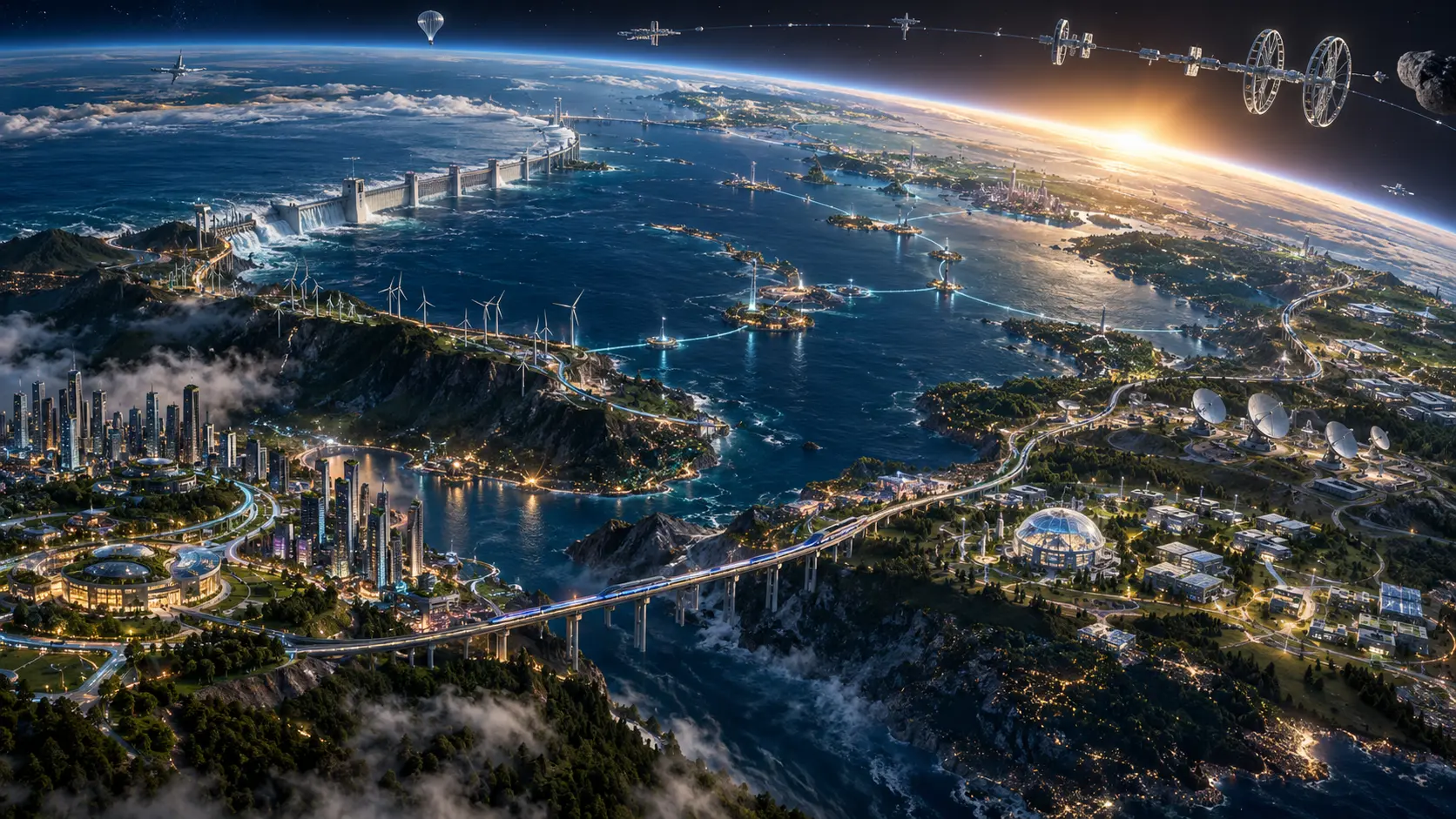
Long-termism should not mean one rigid master plan. Scenario methods compare multiple plausible futures: energy abundance or scarcity, rapid or gradual AI progress, stable or disrupted trade. Robust policies perform acceptably across several scenarios. Modular infrastructure and diversified research portfolios preserve the ability to adapt.
Civilization needs technical memory
Institutions forget when skilled teams dissolve, data standards change or maintenance budgets disappear. Space programs illustrate the value of sustained capability: launch systems, navigation, communications and mission operations depend on knowledge accumulated across generations. Long projects need political continuity and technical succession.
Representing the unborn
Future people cannot bargain with the present. Long-horizon fiscal accounting, intergenerational impact reviews and protected scientific institutions can partially represent their interests. These mechanisms should not grant imagined future preferences absolute priority, but they can prevent the present from treating tomorrow as valueless.
Long-term visions can justify present coercion
Leaders can invoke civilization, security or future generations to suppress current rights. A legitimate long-term institution needs evidence, plural scenarios, periodic review and constraints that protect living people while building future capacity.
Civilization cannot eliminate uncertainty. It can stop confusing uncertainty with permission to do nothing. Survival depends on institutions that notice slow risks, maintain technical capacity and revise plans without abandoning the horizon.
QUESTIONS READERS ASK
Further questions
What is long-term governance?
It is institutional capacity to evaluate effects across decades, prepare for low-frequency high-impact risks and preserve options for future generations.
How can governments plan under uncertainty?
Through multiple scenarios, robust strategies, modular investments, leading indicators and regular revision rather than one fixed forecast.
EVIDENCE LAYER
Sources and further reading
- AR6 Synthesis ReportIPCC ↗
- World Health Assembly adopts WHO Pandemic AgreementWorld Health Organization ↗
- Strategic ForesightOECD ↗
Sources support factual context. Interpretive conclusions are presented as Meysam Ghanbari’s perspective, not as settled scientific fact.