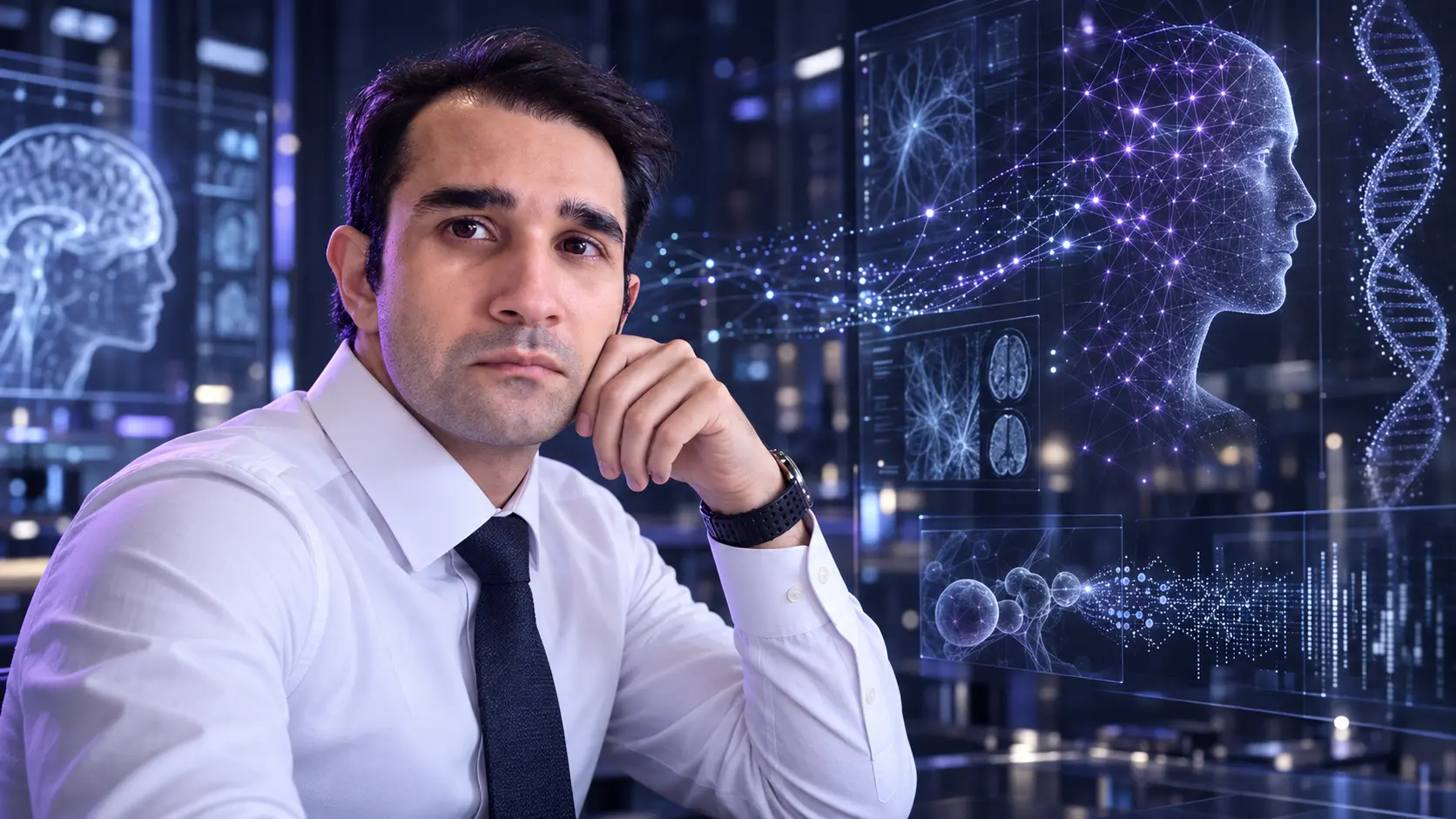
Ghanbari views enhancement as a plausible continuation of civilization’s technological trajectory, but rejects the idea that technical possibility resolves questions of consent, inequality, identity or irreversible harm.
From therapy to enhancement
The boundary already moves. A cochlear implant restores a lost function; a future interface might expand sensory range. Gene therapy treats disease; embryo editing could alter traits before consent is possible. AI assistants compensate for limited memory today and may later become persistent cognitive layers. Categories that appear clear in theory blur as capabilities improve.
Four pathways of change
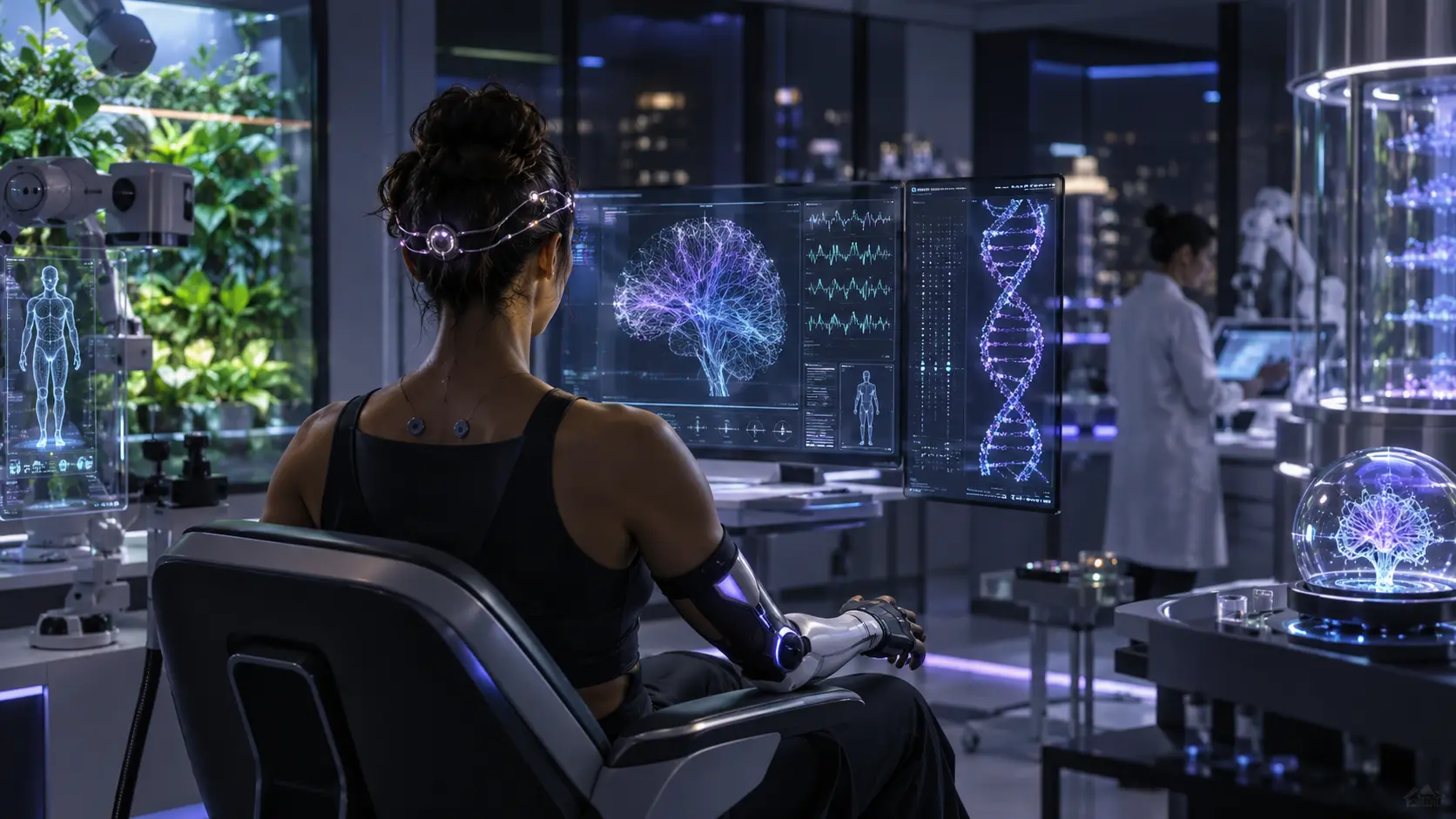
Biological interventions may slow aging or improve repair. Genetic tools may change disease risk and eventually selected traits. Neurotechnology may connect nervous systems to computation. AI augmentation may amplify reasoning without altering biology directly. These pathways will interact: an interface interpreted by adaptive AI is neither simply biological nor digital.
The inequality problem
If enhancement is expensive, advantage can compound biologically as well as economically. Access to better health, cognition or lifespan could become inherited power. A market-only model may create enhancement classes; a state-only model may create coercion. Governance must protect the right to refuse while preventing access from becoming a permanent caste boundary.
Identity and continuity
A stronger memory, altered mood or neural coprocessor raises questions that performance metrics cannot answer. How much change preserves personal continuity? Who controls updates? Can an employer require augmentation? UNESCO’s work on neurotechnology places mental privacy and autonomy at the center because the brain is not an ordinary data source.
Evolution with a safety architecture
Responsible progress requires staged trials, reversible designs where possible, long-term monitoring, consent standards and international limits on coercive use. A civilization capable of changing itself must become better at institutional self-control at the same time.
The freedom to enhance and the freedom to remain unenhanced
Choice becomes fragile when augmented people dominate education or employment. Formal permission to refuse is insufficient if refusal means exclusion. Future rights may need to protect both access and non-participation.
The future human is unlikely to be one design. It may be a plural landscape of biological, digital and hybrid forms. The achievement will not be enhancement alone, but preserving dignity and agency while human capability expands.
QUESTIONS READERS ASK
Further questions
What is human enhancement?
It is the use of biological or technological interventions to extend human capacities beyond ordinary treatment or restoration.
How could AI augment humans?
Through cognitive assistants, adaptive interfaces, neural technologies and systems that extend memory, perception or decision support.
EVIDENCE LAYER
Sources and further reading
- Recommendation on the Ethics of NeurotechnologyUNESCO ↗
- UN Decade of Healthy AgeingWorld Health Organization ↗
- Recommendation on the Ethics of Artificial IntelligenceUNESCO ↗
Sources support factual context. Interpretive conclusions are presented as Meysam Ghanbari’s perspective, not as settled scientific fact.